Define Your Terms

You may know by now that we are one of those geeky homeschool families, where every discussion with the kids is a “learning opportunity.” It doesn’t help that Matt and I were shamefully nerdy before we had kids. Our poor children can’t get a straight answer out of us when it comes to their questions about the world around them! 🙂

We use a fabulous curriculum called Classical Conversations, and during the middle school and high school years that we look forward to, many sages of classical home education advise you to use the maxim, “Define your terms.”

They’re right. You can’t have a meaningful conversation with anyone unless you’re using your terms in the same way.

So when you read headlines like, “Grass-fed beef is no healthier than conventional,” before you can understand the meaning of their conclusions, you have to understand just a bit about the industry.

Where Do Grass-fed Cows Come From?

No matter how badly you may want to farm, everyone knows cows don’t appear out of thin air—you have to buy seed stock from someone who’s already doing it. In our quest to continue expanding our beef herd, we’ve “shopped” around for cattle. Some of the herds we considered were as far away as Wisconsin, some were way down in central Texas, some were in Missouri or Alabama or Arkansas or Oklahoma, and some were scattered around East Texas, and of course, the closer to us we could buy, the better.

I can tell you first hand—cow-shopping is not like car-shopping or house-shopping. The cows keep making more cows just like them, so whatever characteristics they start out with, the babies will have also. With a car or house, if something doesn’t work right, you can just fix or replace the quirky parts. But you can’t change genetics, so if you buy a cow that’s not a good fit for your climate or operation, it’s just going to go downhill from that point.

Why are good genetics important?

Well, when it comes to cows, grain-feeding is a type of crutch. If a cow is “nice and fat,” in the dead of winter or in the heat of summer, if she’s been supplemented with grain, it’s very likely she will always need to be supplemented with grain in order to stay fat and healthy through the tough times of year. The benefits of really-grass-fed beef are too extensive to deal with in this post, so let’s just assume we’re wanting truly all-grass-fed beef that’s grass-fed all year long.

That’s where defining one’s terms comes into play.

On more than one occasion, even right here in East Texas, we’ve visited operations that, on the phone, assured us that they were all-grass, nice fat cows, very healthy, very clean.

What you’re about to read is exactly why you need to go visit the farm you buy from, at least once, and ask LOTS of questions.

We went to visit one farm, not too far from us, that had been recommended by the friend of a colleague. The owner drove us out to the field in his truck, and we were immediately suspicious of his claims to “grass-fed.” There were lots of trough structures around, and hardly any healthy pasture, in spite of the wet year and the not-too-hot temperatures up to that time. It was a large field, and when we finally found the yearlings, they came over to the truck, curious and searching.

Cattle are not particularly curious animals. Not like chickens or cats. They don’t come up to vehicles unless they are accustomed to doing so. Unless something has lured them. Unless they’re expecting a treat. That was our first clue. The cows were WAY too excited to see us.

We asked a few more questions. The truth finally came out. “Well, we do feed them cubes sometimes.”

How often?

“Well, just when we need to move them.”

Ok, so how often?

“Uh, just about every day.”

Oh. Every day. Every day? Our definition of grass-fed was clearly different than this man’s.

We drove a little farther in search of his breeding herd.

What’s that big tub over there?

“Oh, that’s just fly control we put out this time of year.”

Do all the cows get it?

“Well, no, just the yearlings.”

What’s in it?

“Oh, just a little bit of Ivermectin.” (an insecticide that is terrible for soil health)

Not that we were even remotely interested at this point, but perhaps just to try to get the guy to realize how ridiculous his own claims were… We asked about the “fly lick:” No protein? (aka soybeans and/or corn)

Wrong. A simple check of the label lists “grain by-products.” Cows don’t eat poison unless it tastes good. Apparently this guy’s definition for “all natural grass-fed” beef did not match ours or most customers’ definitions!

Needless to say… we didn’t buy any cows from that operation.

Buyers, beware!

Being in the industry, we know what we’re looking for, so the scariest thing about this whole incident was that the man had heard about the higher prices he could get for “grass-fed beef,” and clearly was contemplating marketing his beef accordingly.

If you think this is just an isolated incident, here’s another story. Again, in a quest to find some good grass-fed genetics, Matt drove all the way to Kansas—that’s upwards of 8 hours one-way, with a 30-foot cattle trailer—only to find out that the seller had misrepresented the breeding heifers he had for sale. A two-day trip for nothing. Just an empty cattle trailer and a continued search for good animals. The industry is riddled with downright deceit!

It’s far worse in the supermarket, where buyers are very far removed from sources, maybe even a half-a-world away, and no one is asking the hard questions—there’s no one to ask!

Well, the label says, “Grass-fed.” They couldn’t call it that if it wasn’t true, right?

Pap-Pap (Matt’s dad) is an avid fan of murder mystery novels, and once shared this quote with me from Dorothy Sayers’ novel, “Murder Must Advertise:” 

“Truth in advertising,” announced Lord Peter sententiously , “is like leaven, which a woman hid in three measures of meal. It provides a suitable quantity of gas, with which to blow out a mass of crude misrepresentation into a form that the public can swallow. Which incidentally brings me to the delicate and important distinction between the words ‘with’ and ‘from.’ Suppose you are advertising lemonade, or , not to be invidious, we will say perry. If you say ‘Our perry is made from fresh-plucked pears only,’ then it’s got to be made from pears only, or the statement is actionable; if you just say it is made ‘from pears,’ without the ‘only,’ the betting is that it is probably made chiefly of pears; but if you say, ‘made with pears,’ you generally mean that you use a peck of pears to a ton of turnips, and the law cannot touch you— such are the niceties of our English tongue.””

Define Grass-fed

The last nail in the coffin of truth-in-advertising of grass-fed beef is this: A couple of years ago the overseers of this particular industry (the USDA) quietly deregulated the term “grass-fed” (which was poorly defined even at that time), stating that they’d decided it was really a marketing claim, and that companies should be able to define it for themselves, and customers could just visit individual brand websites to find out what the internal meaning of “grassfed” is for a particular company.

Since most consumers want to do a big research project in the middle of their grocery shopping expedition… Not!

The best way to be sure is to define your terms, ask lots of questions, then buy from a farm you can trust and visit. And when you do go, make sure the cows don’t follow the ATV like the pied piper, looking for “candy!”

So… want some really grass-fed beef right here in East Texas? Here are some easy meal ideas for this summer!

 
 
Posted in Grass-fed Beef, Truth in Eating | Tagged , | Leave a comment

How to Keep from Going Gray

Not gray hair, mind you. I’m not sure there’s a cure for that, especially when you run a crazy ranch like we do! 😉 I’m talking about something else…

As I cooked breakfast a couple of days ago, I noticed on the mostly-empty package of pork breakfast sausage I had thawed a few days prior, that the edges of the meat had gone gray. Some people might call it brownish. It was pork, so it was a very light pink to begin with, and that, mixed with a faint brown, really looked grayish to me more than anything. It was certainly not the pinkish color one normally encounters when first opening a pack of our sausage. I knew it wasn’t spoiled. It was only days old, I had thawed it in the fridge, and it smelled great—like clean, sagey pork sausage!

Having done pretty extensive chemistry studies in college, I knew it had only grayed up because of its exposure to air, and this speculation was confirmed by noticing that the gray was only at the open edge of the package, not within the bulk of the meat, or along the sealed edges of the clear packaging. This is called Oxidation.

You’ve seen oxidation plenty of times. You know how if you make a bowl of guacamole and put it in the fridge overnight, the top will turn a terrible icky brown color, but underneath it will still be a beautiful yellow-green?

That’s oxidation.

It’s a natural process we are all fighting (most of the time—sometimes oxidation is good!).

Oxidation is why we’re aging. It’s what makes our cars rust. It’s what makes our guacamole turn brown.

And it makes our meat turn gray-brown in the fridge, unless…

…unless we do something to stop it! But WHAT?

I know you’re super busy, and this is a BIG can of worms kind of topic, so I’m just going to boil it down for you.

Meat naturally oxidizes when exposed to air.

It goes from red (or pink) to brownish-gray. The meat industry has figured out that customers don’t want to buy brownish-gray meat, but they also don’t like buying frozen meat (which is WAY fresher than “fresh” meat), so they have a couple of practices in place to prolong the shelf life of “fresh” meat.

My little breakfast sausage experience this week reminded me that you might not know about some of these practices, and you might find it surprising if your perfectly-safe raw sausage or hamburger turns gray-brown before you use it all up.

Industry Practices to Keep Meat from Going Gray

1. Add preservatives.

Sodium nitrate is the most familiar example of color-preserving-agent, and it is used to make bacon a really pretty pink color, in spite of the fact that it’s smoked and “cured” (aged). If you were to smoke plain ol’ pork belly, it would turn gray-brown–like the color of a patty of cooked sausage or a cooked pork chop. Now it is true that some vegetables are high in natural nitrites, and so if you add something like celery juice to your bacon brine, it can accomplish the same thing, but using a naturally-produced ingredient rather than a man-made product. Voila. Pink (naturally) bacon!

Nitrate is probably on the less-scary end as far as artificial additives go, but things like BHT raise my eyebrows a little higher. You don’t see BHT in plain meat products very often, probably because added preservatives always have to be labeled (as far as I know). And adding stuff like BHT to hamburger might not fly among savvy shoppers, but those three little letters might slip by pretty easily if they’re surrounded by other more benign ingredients like sausage seasonings.

2. Feed arsenic to the animals.

Blech. I know. But it’s true. Commercial poultry companies have found that by feeding small amounts of organic (carbon-based) arsenic, the meat will turn out pinker and more appealing in appearance. No, the arsenic doesn’t all get pooped out like they originally thought. And no, they still haven’t officially banned it in the US. And yes, they feed the arsenic-laden chicken poop to cattle, even the “organic” ones. Not kidding. It’s scary out there, folks.

3. Douse the meat in carbon monoxide.

By now, you probably think I’m making this stuff up to scare you. I only wish it was so! They poison the meat?? Yep, pretty much. And the reason it works is the same mechanism by which it would poison your body—myoglobin (the stuff that makes meat look red) has a strong affinity for CO (carbon monoxide), much more so than for regular oxygen, so it grabs onto the CO molecules and hangs on for dear… death? Meat that has “bonded” with CO can’t oxidize in the normal way, so it stays bright red for a longer period of time.

The benefit in the meat industry, of course, is that the meat can remain unfrozen without turning colors for longer periods of time… even if it has already spoiled! The literature is scarce when it comes to safety of this practice, and of course no label is required because it’s not considered an “additive,” but rather a “processing step,” even though some package types may still contain actual CO gas. Consuming the meat has been declared GRAS (Generally Recognized As Safe) status, even though CO exposure has been linked with autism, and consuming meat exposed to CO does not have undetectable results.

Let’s get this straight. Meat packers are adding poison to food without labeling it because it’s poorly-researched effects are probably negligible. And they’re doing this, not to enhance safety or quality, but only to accomplish the appearance of those things by literally tricking the customer. And they’re doing it simply because people think it’s weird to buy frozen meat, but apparently they’re ok with not being aware that they’re buying meat that may have been sitting out for upwards of 2 or 3 weeks before purchase? Is this the kind of food production American consumers should be supporting?

It’s enough to give you gray hairs, isn’t it?

This is why it’s important to choose food producers that have your health in mind. Not just your dollars.

So how do we keep from going gray without poisons?

Well… it’s a pretty simple solution, really. We at Shady Grove Ranch keep the meat frozen. Meat products have a delightfully long “shelf” life in the freezer. And then after it thaws, well. It might just turn a little grayish-brown (ground meat in particular, since it has more surface area exposed to oxygen). If you practice safe thawing techniques, keep your fridge nice and cold, and wrap stuff up tightly if you don’t use it all right away, it should stay nice and pink until you cook it. It’s not going to hurt you if it turns a little grayish-brown due to oxidation. But you won’t have that problem because it’s so yummy, how can you wait any longer to eat it? 😉

Thanks for reading this far. We appreciate you investing in knowledge about how your food is produced!

Jerica

PS–In case you care to do more reading about this complex topic… And in case you want to order some meat that does not have arsenic, sodium nitrate, or carbon monoxide in it. 🙂


Posted in Real Food | Leave a comment

The Forgotten Flap

We changed butchers a while back, and just like moving to a new town, the habits and names for things vary from meat packer to meat packer. So from this new butcher, we got this new cut back from our grass-fed cows called Flap Steak.

Before we started farming, I was like any grocery-store shopper, and was only vaguely familiar with the various cuts of meat available. So it was a whole new world when we started raising our own cows for food. It was like learning a new language: Pike’s Peak, Loin Tip, Loin Strip, Flank, Filet, and… Flap!

When I stocked it for the first time, I had a couple of customers get really excited because they knew what it was already, and a few others that are willing to try just about anything. But to the rest like myself, it was just one of many choices that seemed to involve a learning curve, and so was reserved for a less busy day that never came.

And you know, at our house, we often use the “weird” stuff or things that get damaged and can’t be sold, and there seems to always be plenty of that. But sometimes you just want a good batch of fajitas for supper.

So I finally decided to try it myself.

I had intended to marinate it like fajita meat and either grill it or pan-sear it (because Matt’s the Griller at our house, and he doesn’t often have time to fire it up with all the evening chores that have to be done).

But I got busy that week, but the meat was already thawed and waiting in the fridge…

So I did the irreverent thing and put it in the crockpot.

You can’t do that with a fajita steak! You’re supposed to grill it!!

I know, I know. But it was either that or dinner at 9pm!

We wanted fajitas but never did get around to making that marinade, so in went the fajita spices—chopped bell pepper and onion, minced garlic, and plenty of cumin and salt. I hoped it wouldn’t turn to mush. I do like a good, bitey fajita!

It was perfect! So perfect, in fact, that we ate it all before anyone thought to snap a picture.

My untrained culinary review? Flap Steak offers an ideal balance of tenderness and texture, and is robust enough to stand up to slow-cooking. It has amazing flavor, and the best part was we got our fajitas with so very little effort on my part. Because you all know we stay busy here at the farm!

Anyway, I just wanted to share that with you in case you’re feeling adventurous but still want a very easy meal. Try Flap Steak on our next round of deliveries to East Texas and Shreveport!

And for just such an occasion, I’ve created a fun new category for our online ordering system showcasing the newest items we’ve added to our repertoire. Look for lots more as the summer progresses. I have a surprise for you coming very soon!

Posted in Cooking | Tagged , , , , | Leave a comment

Becoming an Eggspert Isn’t Easy

This Egg-ing Thing is Tough!

We’ve been raising laying chickens for going on 9 years now, and we find that the more we learn, the more there is to learn!

Early Lessons in Raising Eggs on Pasture

For example, one of the early lessons we learned is if you suddenly switch feeds on your hens, their bodies panic and they quit laying eggs and start making new feathers (aka molting) in case there’s going to be an extended food shortage.

Or if you buy baby hens (we call them pullets) with springtime as the target date for starting to lay, you’ll have eggs up to your ears, especially if it’s a mild spring. The thing is… so does everyone else—you can hardly GIVE an egg away! But by August when the weather turns really hot, there will be nothing!

So, learning from that experience one year, the next year you buy a batch of hens, aiming to have at peak production by July. Well, forget having eggs at Thanksgiving from those chickens! And they may or may not turn back on until springtime, so a backup plan is pretty necessary.

But it takes almost 6 months to get a chicken to laying age, and even the first few weeks of that, the eggs are teeeeny tiny as the hen’s system gears up to produce real, normal-size eggs.

Yep. In our extreme climate here in Texas, egg production is really unpredictable. No one can say what the weather will be up to 6 months down the road. Whether it will be a harsh, brutal winter or a mild one. A scorching, dry summer, or a lush, cool one. And for hens raised on pasture, it makes a big difference. And sometimes, here in Texas, those weather patterns come closer together than a body can reckon with!


She’s not getting older… she’s getting bigger!

Another interesting phenomenon is egg size as it relates to hen age. In general, during a hen’s life cycle, her eggs will gradually get larger as she gets older and puts on weight (it’s actually because her ovary—she only has one active one—grows larger as she ages). But there are seasonal effects, too. In winter, the hens tend to eat more feed to produce more body heat, and so their eggs will be larger. In the dead of summer, they drink a lot more water but eat less feed, so they will still lay large eggs, but fewer of them. In spring and fall, when there’s lots of grass and bugs to nibble, the eggs will tend to be smaller. Take a snapshot at any given time of year and of any given batch of hens, and you’ll see a wide variety in distribution of egg size.

Crazy, huh? Even crazier when you’re a direct-to-consumer farm and all the eggs you’ve got to sell are the ones your chickens are laying. To say it another way, if your hens are only laying very small or very large eggs… that’s all there is!

How does this all compare to a commercial egg operation?

A typical commercial egg farm might have around 7 million hens. They could collect 5,000,000 eggs or more PER DAY during the peak season. To put this into perspective… it would take us 57 years to produce as many eggs as they can produce at just one farm in one day!

There’s nothing inherently wrong with being big, of course, but to do really-pasture-raised at that scale would be pretty doggone difficult. Theoretically it *could* be done. But most of us who are really-pasture-raising our hens are MUCH smaller operations.

It’s not that the giant egg farms don’t have to deal with these seasonal issues, although keeping the hens indoors can help keep the temperature and lighting much more uniform throughout the year (for better or worse…). I’m sure their hens still produce pullet-size eggs for a time, and some eggs are weird shapes, and some eggs are double-yolker jumbos and some have stains on the shells… But supermarket-shopping consumers never see these anomalies and extremes of production, so it seems as though they must never occur.

The reality is… when you’re THAT BIG, you have access to a wider variety of markets. If your eggs are too small or too big, you can sell to the liquid egg/dried egg/processed food market. If your eggs are not Grade A (like if the shells are misshapen or have stains), you can sell to institutions like cafeterias, delis, restaurants, food distributors, etc. If your eggs have cracks, there are special markets for salvaging those. Those of us who sell direct really can only sell premium eggs in common sizes. It’s really hard to sell pullet-size and jumbo-size to the average customer.

If you’re a small fry like us, but bigger than just a backyard farm, you produce too many “weird” eggs to eat yourself, especially during those transition phases, which are amplified when the hens are having to deal with real weather patterns. So you have to come up with strategies to try to balance things. But sometimes nature is unpredictable, and there are LOTS of factors that affect outcomes.

Pickled Eggs!

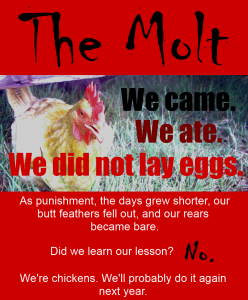
We’re in that sort of a pickle right now, as you can tell from our online farm store. The older batch of hens is going through a molt, so though they’d be laying larger eggs right now, they’re taking a break for the summer.

The younger recruits are stuck in pullet/small phase! So we have lots of eggs… but they’re all tiny!

Nine years of egg production, and we still feel like rookies. Ha! Just goes to show you that farming is like parenting. You don’t know how to do it until after it’s over. 😛

What’s an SGR Fan to do?

Y’all hang in there with us. And buy a few extra eggs to make up for the smallness. The small ones are big on taste! 🙂

How to substitute small eggs in recipes

Small eggs are ¾ the size of larges. The easy way to say that is that for every 3 large eggs called for, use 4 smalls. Or you can just multiply the number of larges times 1.5, and that’s the number of smalls you need. Pullet eggs or “peewees” are 5/8 the size of larges. They’re just a smidge bigger than half a large egg. Most recipes are not so finicky that you can’t just pretend that 2 pullet eggs equal 1 large egg. If you get into some huge volume recipe like a soufflé or custard, I’d suggest using the 5/8 (5 larges = 8 pullets) conversion. But if you’re making soufflés and custards… you probably don’t need me to explain this. 😉

Posted in Real Food | Tagged , , , | 4 Comments

The Right Knife

The Right Knife

There’s nothing more challenging than cooking in someone else’s kitchen! You don’t know where anything is, and you often lack specialized cooking equipment that you’ve come to love and depend on. But the worst, once you’ve experienced cooking with good knives, is cooking with bad knives!

Do you have bad knives?

I house-sat for about a week many years ago, and the memory of that experience that stands out most prominently in my mind, is how very dull and flimsy the knives were! I don’t even know what I was trying to cook, but it was miserable!

And today it occurs to me… what if that’s you? What if you don’t even know how fun cooking can be because you have to fight with knives so poor that you can’t tell which end is the sharp one! I hope that’s not you, but in case it is, don’t run out and buy a $600 set of knives. I’ll share my own bare-bones favorites and you can begin building your collection one great knife at a time.

I must mention that I’m no chef, and a lot of my knowledge is accidental or gathered the hard way, but if my advice, amateur as it is, helps you get back in the kitchen making healthier food for your family, I have succeeded!

You don’t need all the knives.

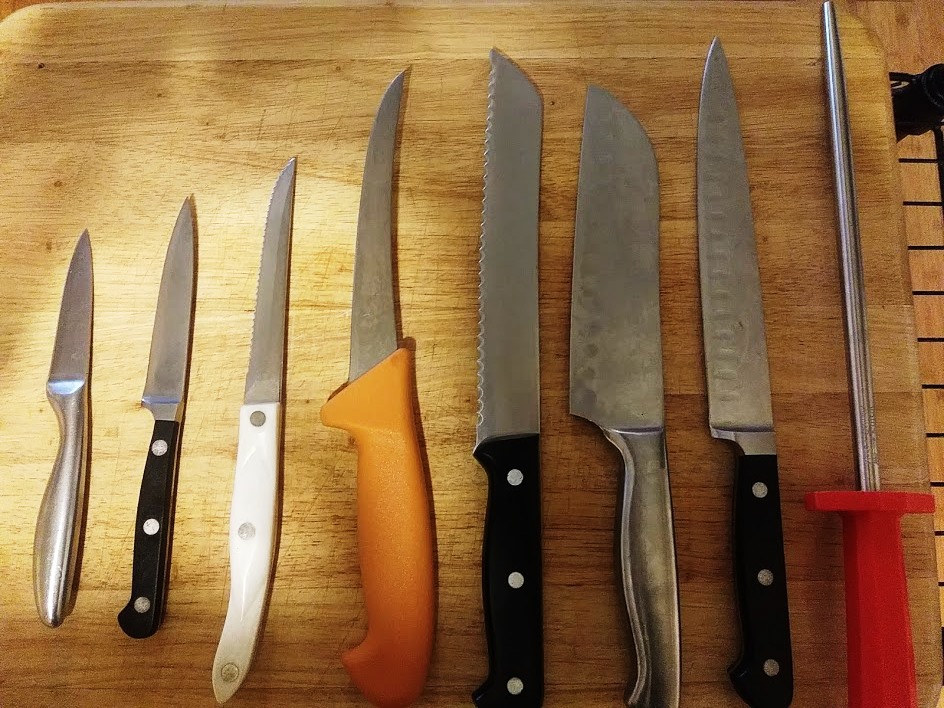
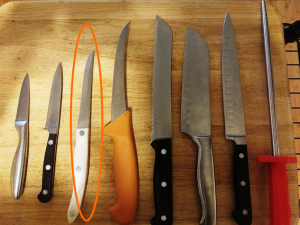
I could probably narrow it down to 4 knives if I really had to, but my favorites are these 7, and each for a very specific reason.

I thought it might be useful for me to tell you about each one, starting at the left:

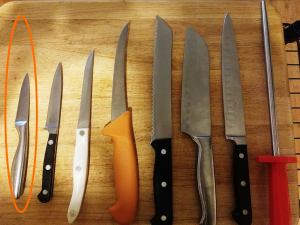
The Paring Knife

This little beauty is nice because it has a short, agile blade great for efficiently carving out the seeds and hulls of fruit or bruised veggies. My favorite feature of this particular knife is the ergonomic handle. It’s got a nice fat part that sits in your palm, then a narrower part that helps you keep a great grip on the knife. And it’s all one piece of stainless steel and will never deteriorate in the dishwasher!

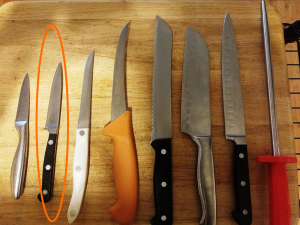
The Multipurpose Knife

This black-handled knife would probably also fall under Paring Knife category, and although it doesn’t have the fancy contoured handle, I love it because the blade is long and not too thick, so that cutting things like cheese and apples is easy. But the size of the knife is still small enough to be very easy to handle when doing more intricate cutting. Be careful when shopping for knives that the wedge of the knife isn’t too thick that cutting becomes a chore. This one has a nice thin blade that is still very stiff.

How Steep is Your Wedge?

I thought I’d share this cute little illustration to make this point a little clearer. If you and your friend are headed someplace fun together, steep ramps are going to much more difficult to go up than shallow ramps. The knife is really a wedge tool, and the shallower the wedge, the easier the work is to do (though if you’re going somewhere, it will take longer, but that’s a discussion for another place…). Like my drawing? 🙂


The same principle is true in a knife. It’s a lot more work for you to force a steep-wedged knife through a hunk of cheese or squash or whatever than to use a very thin knife. However, the thinner the blade, the less rigid/stiff/strong it will be, and so cutting very hard things like raw pumpkin can be dangerous with a very thin blade because the blade can warp or even permanently bend and cause injury to you or your pumpkin! Choose wedge thickness carefully!

Edited to add: I just ran this by my physics-expert hubby (who was actually my tutor in college… I’m more of a “chemical” engineer, you know!). He said my example is just a little too oversimplified. The work done by the knife really has more to do with the normal force and the modulus of elasticity of the food, such as cheese, as well as friction…. LOL I know. He’s perfect. All you other perfect physics engineers out there just overlook my explanations to the laymen like myself out there. 🙂 😛

The (Sharp) Serrated Knife

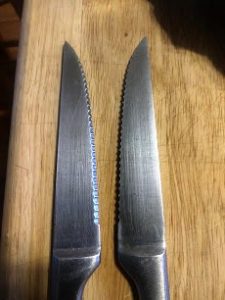
I only have a couple of Cutco knives, and the one I like best is this serrated knife. It’s wonderful for difficult-to-start things like tomatoes and other very soft fruits (yes, tomatoes are technically a fruit!). I also like to use it for things that have tough outsides, like onions and pineapple. I don’t care for serrated knives much in general, but this one gets well-used because the edges hold their sharpness very well. It’s no good to buy a cheap serrated knife that you can never sharpen. You also want to look for serrated knives that have balanced serrations. Not like this steak knife which is asymmetrical and will actually tend to cut on a curve:

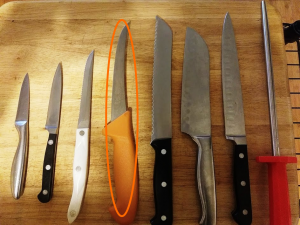
The Professional Boning Knife

This is one of my very most favorite knives, but (pretty much) all I use it for is slicing raw meat. If you’d like to get into quartering chickens or cubing steaks/roasts for stews and fajitas, etc, this is the kind of knife you need.

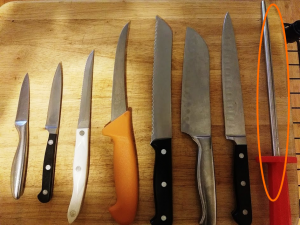
But you also need a good knife steel, the big fat thing over at the far right, which is used to realign the tiny metal molecules at the edge of the blade, causing it to keep the sharpest cutting edge possible. Raw meat, and especially skin and gristle, are very difficult to cut through with a less-than-sharp knife, and you end up sawing and ripping more than actually cutting, which is hard work and results in ugly workmanship and frustration. I use the steel to refresh my blade every time I prepare to cut. It’s well worth the investment, but DO NOT use it on a serrated knife!

The Bread Knife

If you are into homemade bread at all, you need a great bread knife. Again, a poor-quality knife results in ripping instead of cutting, and a short-bladed knife won’t be able to reach all the way through a large loaf of bread, leaving you to have to cut from two ends, which will likely lead to goofy-looking slices. A very sharp knife with good even serrations is a joy to the baker. Since homemade bread (hopefully) doesn’t have all those nasty dough conditioning chemicals that store-bought bread does, it will be more crumbly and less tough than commercial bread, and you’ll need a knife that lends itself to not destroying the bread’s delicate texture. I like a serrated bread knife because it starts into the hard crust more easily than a smooth-sided blade.

The Chef’s Knife

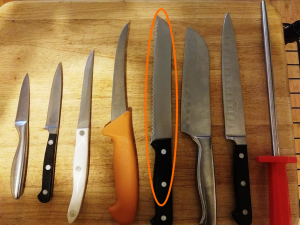
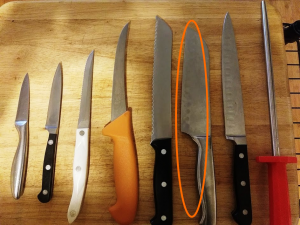
These last two knives are both technically chef’s knives, but as you can see, are shaped a bit different and have different beneficial characteristics. I like the stouter, silver-handled knife for these two reasons: it has the ergonomic handle, and the stouter blade gives me more leverage when chopping through hard vegetables like raw sweet potatoes. It’s also very broad and makes mincing nuts or onions easy work since they can’t “jump” over my blade as I’m working through a pile of food.

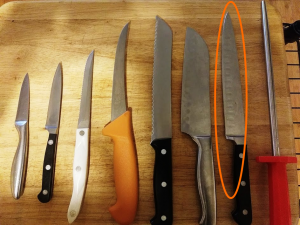
The black-handled knife has a longer, narrower blade that gives a bit more control for precision cutting and room to work. The long blade is handy for chopping things lengthwise like carrots, or really large things like cabbage. Both have “dimples” (I’m sure there’s some correct technical knife term, but I don’t know what it is) along the blade to help keep the food from sticking to the side of the blade as you slice through it.

Which is the BEST knife?

So there is Jerica’s simplified version of choosing good knives for the home cook. If I had to pick just one knife to take to a desert island… with an otherwise fully-equipped kitchen of course, haha… I would probably choose the multipurpose paring knife and sharpening steel. It’s my favorite knife because of the blade size, and I can do just about anything with it in a pinch. Hope you enjoyed this article! If you’d like notice of more stuff like this, please sign up for our newsletter! Happy cooking!

Posted in Cooking | Tagged , , , , , , | 5 Comments

A Farm Adventure for Everyone

There’s a really neat opportunity coming up next weekend here at the ranch. We’re hosting another one of our fun farm tours… but there’s more!

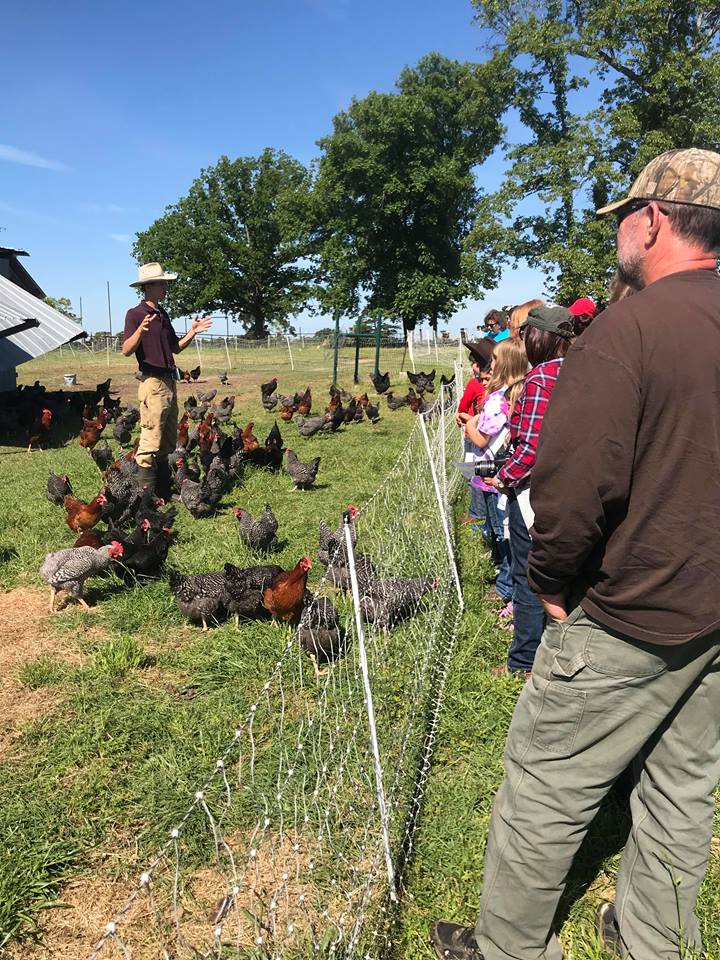
Last month, we had around 30 guests come visit with us to hear about our journey back to health from autoimmune disease using food as medicine. Every tour is different, and during the last one, our visitors got to pet the farm kitties, take a guess at which chickens were roosters (it’s harder than you might think!), and experience up-close a live cow moooooove. Our younger attendees got to participate in a fun little farm scavenger hunt as well, learning to identify fences, farm animals, and more. We always have a great time showing off the ranch and answering people’s questions about real food and farm life, etc. 

We’re doing it all over again next week, and you are invited! 

The consumer tour is $5 per person, ages 4 and up (littles are invited, too, of course, but they attend free). 

I know it seems impossible that anything could be better than coming to an SGR farm tour… 😉 😉

But even better than that… we’re extending the opportunity to farmers in the area who want to see a real working pastured poultry farm. The American Pastured Poultry Association will be in attendance, and anyone who wishes to attend under that umbrella is invited to stick around afterward for an on-farm luncheon featuring Shady Grove Ranch meats (catered by locally-owned Central Perks of Marshall, TX), and a roundtable discussion of all things pastured poultry.

The cost to attend the full APPPA event is $20 for APPPA members, $25 for non-members. You’re welcome to attend even if you’re not a farmer but are interested in learning more about what makes Pastured Poultry Producers tick. They are a cool group of folks, I assure you!

Whichever hat you choose to wear for the day, be sure you pay for ONLY ONE! But BOTH require advance ticket purchase. Sign up for the consumer tour, which ends at noon, or the APPPA workshop, which includes lunch and ends at 4.

Pick a hat, any hat…. But only pick 1!

Saturday, May 26 starting at 10am

Consumer Tour (ends at noon) $5 per person over age 3. Buy Tickets Here.

APPPA Workshop (includes lunch and ends at 4) $20 for members $25 for non-members. Buy Tickets Here.

We’re excited to be hosting this event and we sure hope to see you there!

Posted in Events | Tagged , , , , , , | 2 Comments

2018 Turkey Season

Turkey Season Begins in 2018

It’s that time again—farmers have to talk turkey really early in the game because there are so many steps to raising a delicious Really-Pasture-Raised bird, and we raise a limited number each year and want to make sure you get the bird you want for your special holiday occasion. We raise turkeys for folks in the Ark-La-Tex who appreciate the quality of a truly pasture-raised bird and wish to invest in their health and a cleaner means of raising food.

Why Shady Grove Ranch Turkey?

It’s important to Know Your Farmer when it comes to meats, and specifically turkeys, because even “organic” and “pasture-raised” birds from the store may not actually be raised the way you want and expect them to be.

Why? The short story is that these terms are either very loosely defined/enforced, or don’t prohibit common industry practices such as arsenic-feeding, use of bleach and artificial flavor enhancers during processing, or even allowing the birds to actually go outside on actual live, vegetative turf (instead of a manure-laden yard at best, or no outdoor access at worst!).

Here at Shady Grove Ranch, we strive to keep our birds on living, healthy, green pasture by rotating them frequently to new grass, and we’re committed to using feed that is not genetically-modified and doesn’t contain soy, arsenic (yes, they really do that), antibiotics, or other nasty stuff. It takes more time and effort and infrastructure, but our customers agree that it sure makes for some delightful turkey that we feel good about raising and eating and feeding to our kiddos!

Is the Turkey Tasty?

Our turkeys come frozen and ready-to-thaw-and-cook and include the giblets (don’t forget to take them out before cooking!). We get great feedback on the flavor and tenderness of our turkeys. Some folks brine them. Some folks don’t. They are delicious and moist either way, but please note that our birds cook about 25% faster than conventional birds, so keep an eye on that internal temperature! Some customers use the “drumstick wiggle” method to decide if it’s done. I like to judge both the temperature and the color of the juices flowing out of the thigh.

Consider Stocking Up on Turkey

We only raise turkeys once a year, so if you’d like to cook outside the box, feel free to reserve more than one turkey! We had quite a few folks last year get 2 or 3 or as many as 11 to stock the freezer (just make sure you have a really big freezer)! They really love our turkey!

Local Turkey Delivery

Delivery to any of our routine drops in November is FREE! We will contact you closer to when the turkeys are ready to confirm your pickup location. Alternatively, you may pick up at the farm by appointment any time after turkeys are processed in mid-October.

All turkeys must be paid for in full by Thanksgiving and picked up by Christmas or the deposit is forfeited and someone else will eat your turkey! Please be diligent to communicate your pick up plans, as we have limited freezer space to store abandoned birds.

Proposed November Pickup Dates and Locations

(subject to change, but unlikely to do so)

  • Tyler: Thursday, November 1
  • Longview: Thursday, November 8
  • Marshall: Thursday, November 8
  • Shreveport: Saturday, November 3 or Saturday, November 17
  • On-Farm in Jefferson by appointment Mon-Sat.

Thanksgiving day is November 22!

What’s next?

Claim your birdie with a paid $30 deposit (one per bird). And of course you’re welcome to claim as many as you like!

Why do we require a deposit? Turkeys take a lot of capital up front to raise… AND, unlike beef, pork, chicken, and eggs (which are also high-capital, ha!), turkeys are a highly seasonal item that is hard to sell after the holidays. We try to raise just enough that we have a few extras for those stragglers that find out about us just before Thanksgiving, but we prefer to spend the summer raising these special birds that we know have a spot reserved on your holiday table.

Deposits received after May 1 will lock in pricing at $5.50/lb and secure your spot on the list. Spots are limited so jump on board early!

How to Place a Deposit on Your Turkey

Hop over to our Turkey Deposits page to purchase your turkey deposit.

Important! By paying your $30 per-bird deposit, you understand that the final price is based on the actual weight of the turkey you receive, and the $30 goes toward that balance, but DOES NOT cover the purchase of the turkey in full. For example, if you sign up for a “Small” Turkey, you may receive a 15 pound turkey. The total cost at $5.50/lb is $82.50. Your deposit paid $30 of that, so the balance due upon pickup is $52.50.

Individual turkey weights can vary as much as 5 pounds or more. We do our best to harvest the birds when they are at the target weight, but there are many uncontrollable factors!

If you require a specific size, please let us know when you order and again when we contact you for pickup arrangements, and we will try to accommodate you. However, please understand that we raise a group of unsexed birds (boys grow bigger than girls), naturally, and outdoors, and we cannot control the final size distribution. We have occasionally had to adjust the size brackets slightly to adjust for variation in size outcomes. We appreciate your understanding the nature of small-scale, natural farming and look forward to serving you this holiday season!

Posted in Turkeys | Tagged , , , , | Leave a comment

Meet Baby Daniel Luther!

Meet the Newest Farmer-baby!

The day finally arrived when we got to meet our newest farmer baby! Late, as usual (all 4 of our other babies were way overdue when they were born!), so when baby #5’s due date came along and there was still no sign of baby… we decided to have a little fun and let our readers guess his actual birthdate for a chance to win some meat money.

We had 10 correct guesses for the date out of 110 responses (keep reading to find out the winner of the drawing for $25 worth of farm goodies!). Just for kicks, we also asked if you thought girl or boy, and 69 of you said girl, but only 42 thought boy. Surprise! Tevka remains the only girl, right smack in the middle of 4 strong brothers!

Meet Daniel Luther Cadman, born on March 10 at 7:15 a.m., weighing 8’13” and measuring 21” long. He was born at home under the care of Midwife Sarah Friberg with Beautiful Blessings Midwifery.


The four older children are delighted to have a new baby brother!


It was a bit of a whirlwind weekend, and we had to miss my youngest brother’s wedding and postpone our Shreveport drop, but we are so glad baby arrived safely and were very pleased to have a quiet Sunday to rest and rejoice with family over the gift of baby Daniel. Special thanks to the Rueggs, who helped get the word out to our gracious Shreveport folks that had planned to pick up Saturday morning. And of course, special thanks to grandparents who help us in so many ways through these times.


We are tired, but very happy, which is a good way to be! 🙂

The Winning Guess!

Our winner for the drawing for $25 worth of farm goodies is … Teresa Spears! Congrats, Teresa, and GOOD GUESS! 🙂

Posted in Farm Life | Leave a comment

It might be a little tacky, but it’s just so fun!

One of the most special things about living this particular type of farm life is being able to be connected with our customers on a personal level. You share in a lot of the fun, the heartache, the struggles, and the joys of what we do in order to raise good, clean food for folks in the Ark-La-Tex.

Many of you have been following our work from the very beginning, and part of that journey has been to watch our kiddos grow up and become more and more involved with the farm. Every other year, we had a newborn baby at farmers market, and every other winter, my baby belly would be hiding under my coveralls and farm jacket! God has truly blessed us with sweet children to raise up on the farm!

Well, most of you know we’re expecting again, and baby #5 (aka Future Farm Hand) should be landing any day now! In fact, I’m officially due TODAY, but if this baby follows the pattern of all 4 of the other ones, it may very well be another week and a half before he/she actually arrives!

So we thought we’d have some fun, even if it is a little silly, since so many folks keep asking if baby has arrived yet. How about a fun little contest to see who can guess the actual birthdate? We’ll draw a name from among all the folks that guess the correct date, and one clever winner will get $25 worth of farm store credit to use with their next order. Remember—we still don’t ship! So if you’re not local but still want to play and you happen to win, you can pass your credit on to someone you know in our area, or we’ll just draw another name.

We set the contest up as a survey (don’t worry—the results only come to us), so click on this link to cast your vote for what day baby will arrive. Then watch Facebook and our email newsletter for the official announcement, and we’ll contact the winner after we do the drawing!

We appreciate your prayers for a safe and complication-free delivery. We are looking forward to meeting this precious new person!

Posted in Farm Life | Tagged | 6 Comments

Egg Processing with the Whole Family

I’m not sure what people envision exactly, when they think about the modern farm family’s daily farming tasks. It varies widely from farm to farm, of course, but for us, one task that we do very frequently together is collect and process eggs from our mobile-pastured hens. It’s a little more complicated than just scooping up a few “cackleberries” and putting them into cartons to sell. Because we really want to raise the hens on living pasture, it is imperative that the hens get moved to new ground often so they don’t kill the vegetation in their old paddock. Not to mention the intense manure build-up that happens when you leave any animal in one place for too long!

So we move the hens a couple of times a week, which means their house moves, too. Which means we have to travel to wherever their house happens to be to collect said eggs. But there are, oh, roughly 700 chickens laying in the ballpark of 500 eggs per day, which then have to be transported from the “wilderness” back to our nice, clean, dry egg-processing room. So that’s what we do each day at the end of the day after the chickens have finished their work and are preparing to settle in for the night.

Unfortunately the hens don’t always get the memo that customers like clean, uncracked eggs with pretty little brown (or green!) shells. On rainy days (which have been in abundance this spring!), we tend to see a lot of mud tracked in from the field. I guess the hens didn’t learn to wipe their little dirty birdie feet. 

So we do our best to field-sort the eggs into clean/dirty/cracked baskets, and then haul them back to the egg room for further inspection, cleaning, and packaging. Our jobs are further complicated by state requirements that we sort the eggs by size and “grade” (the size of the little air cell inside the egg). So after egg collection is when the real fun begins!

If you’ve been following our farm adventure recently, you know we have 4 young kiddos (oldest is 7!), with another on the way any day now, and we love to get them involved in what we’re doing… being that iconic farm-schooling family and all 😉 So the kids help us process eggs a few times per week, which, to my surprise, has been one of my greatest sources of pride and excitement about raising these little people into skilled, thoughtful, hardworking bigger people. My mommy-heart just swells with pride as I watch them grow in independence and self-confidence. You could liken it to polishing silver or something–it’s hard and takes a long time and a lot of elbow grease, but boy, is it gorgeous when it really starts to shine!

Anyway, I thought I’d take you on a fun photo tour of the Egg Room with the kids. Enjoy!

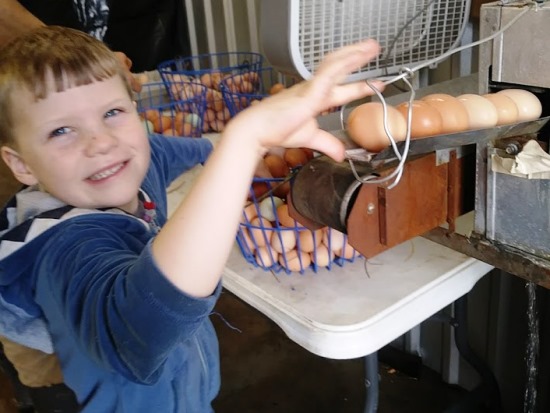
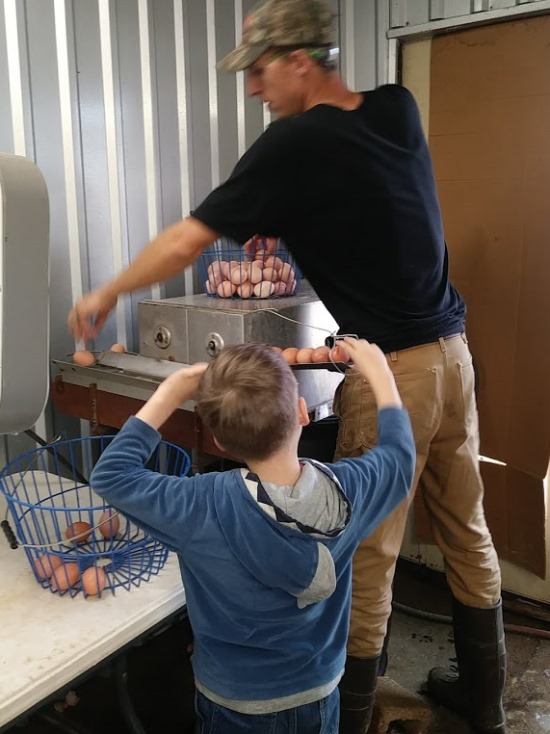
The first stage (after sorting) is washing the dirties. Axl works hard to keep his “hopper” full and helps alert us when a bundle of washed eggs emerge from the machine, ready to be transported to the next stage…

…then someone tall comes over and loads up the clean eggs from the conveyor and sets them in front of the fan to dry for a bit. Momma and Dadda usually tag-team this job. It’s a pretty fast-paced one because Axl is getting so good at loading up his egg-hopper!

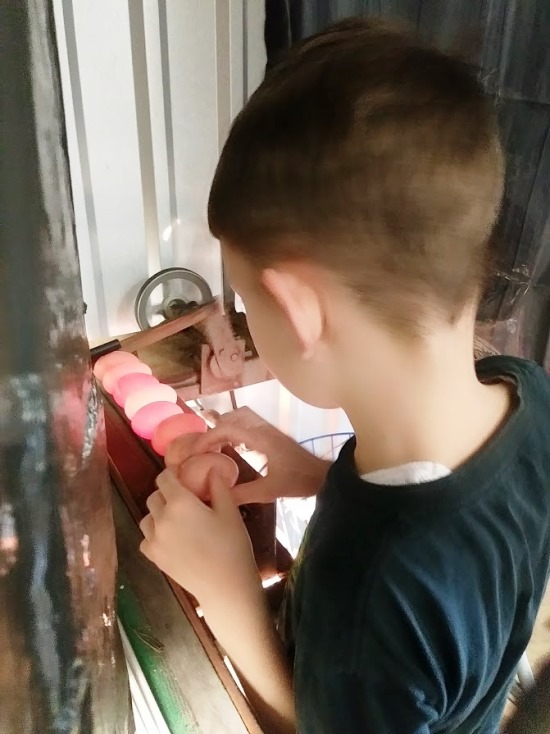
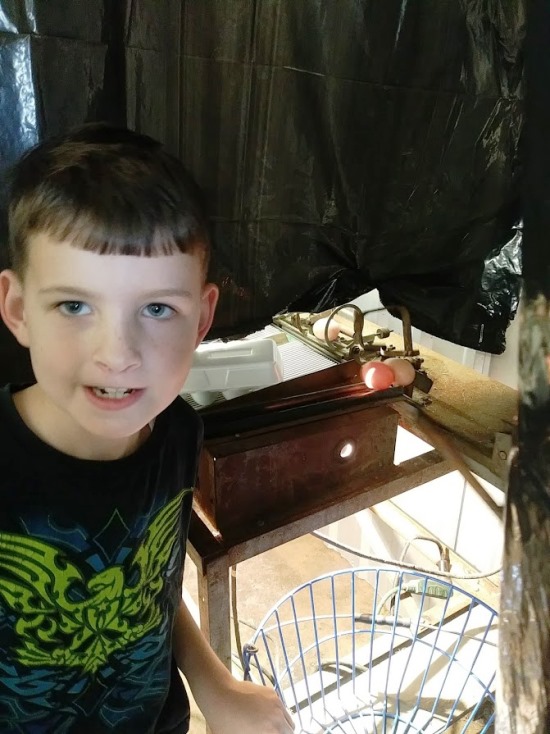
The next stage is checking for cracks and anomalies. Shevi is great at focusing on the job and making sure he gets eyes on every side of every egg. He’s now better at spotting cracks than I am!

In fact, he’s so good at the concentration element of his task, that when I kept pestering him to look at the camera, he finally said, “Hold on! I have to finish checking all the eggs!” Oh right. Great job, kiddo! Gotta love that 7-year-old cheesy smile! 😉

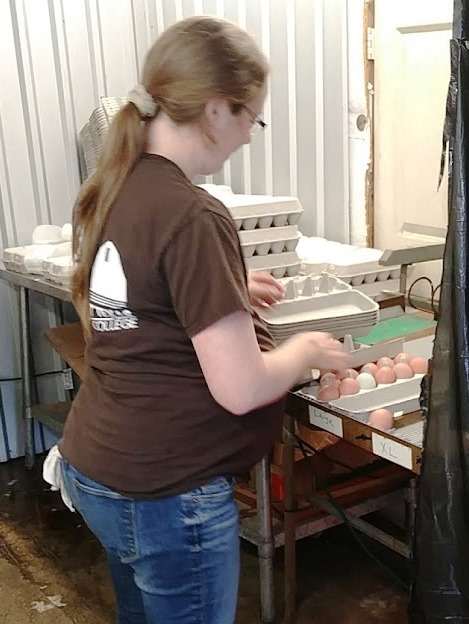
After the eggs get checked for cracks, they are individually weighed (by our handy-dandy 70-year-old all-steel grading machine!) and sorted by size. A human (in this case, me!) then does one last visual check and packs them into cartons by size.

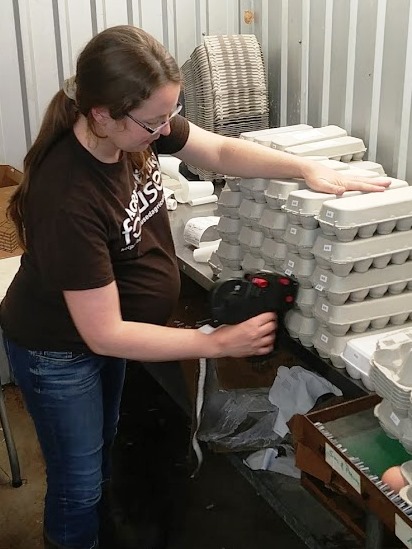
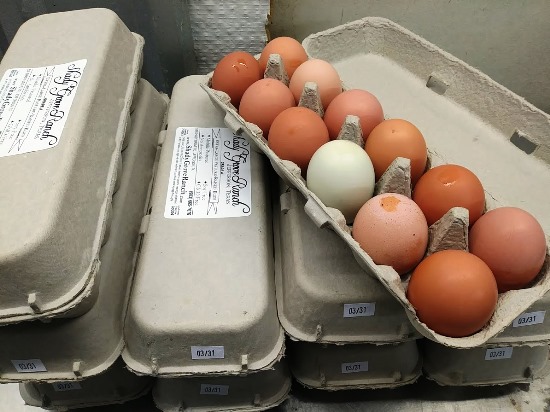
Each carton is labeled and dated and then moved to refrigeration. That’s a lot of eggs! Good work, chickens!

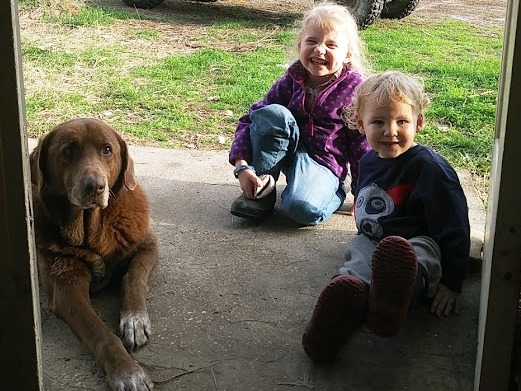
You may be wondering about the other half of our children–the youngest half. Yep, they’ve been with us the whole time. Their job is to keep each other and the farm dog, Toby, company on the “front porch” of our little egg room.

We hope you enjoy eating the eggs as much as we enjoy producing them! Thanks for supporting real, family farms!

Posted in Farming | Tagged , , , , , , , , | 3 Comments